Heat Pump Repair
Heat Pump Repair in Conroe, TX
A heat pump keeps the house warm in January and cool in July out of the same outdoor cabinet, which means there are two separate jobs it can fail at instead of one. We diagnose every make and model and answer the phone around the clock.
One cabinet does the job of two, and either half can quit
Homeowners usually describe a heat pump problem one of a few ways: weak or uneven airflow between rooms, a system that never quite reaches the temperature on the thermostat, a clanking or hissing noise that wasn't there last season, or a unit that seems to run constantly without much to show for it. Underneath any of those, the actual fault tends to sit in one of two places that are specific to how a heat pump works. The reversing valve is the part that decides which direction refrigerant flows, and it is the difference between heating mode and cooling mode inside the same equipment. When it sticks or fails partway, a system can blow cold air while the thermostat is calling for heat, or the other way around. The other common culprit is the defrost cycle. In cold weather the outdoor coil collects frost, and the system has to periodically stop, reverse briefly to melt it, and bring in electric backup heat while it does. When that cycle runs too often, runs too long, or the backup heat stays on longer than it should, the house stays comfortable but the electric bill climbs, and that is a mechanical problem, not a cold snap.
What the diagnosis actually checks
A repair call on a heat pump isn't the same checklist as a straight air conditioner, because both directions of the system have to be tested. That means confirming the reversing valve switches cleanly in both modes, watching a full defrost cycle to see whether it starts, runs and ends the way it should, and measuring refrigerant charge and airflow across both the indoor and outdoor coils. Electrical components get checked too, since a weak capacitor or a failing contactor can produce symptoms that look identical to a refrigerant problem until someone actually measures it. We work on heat pumps of every brand, not only the equipment we sell, and a technician is on call 24 hours a day, every day of the year, if the system picks the worst possible time to act up.
Rated 4.9 from 260 Google reviews. Texas License #TACLB016624E. Call (281) 292-3398.
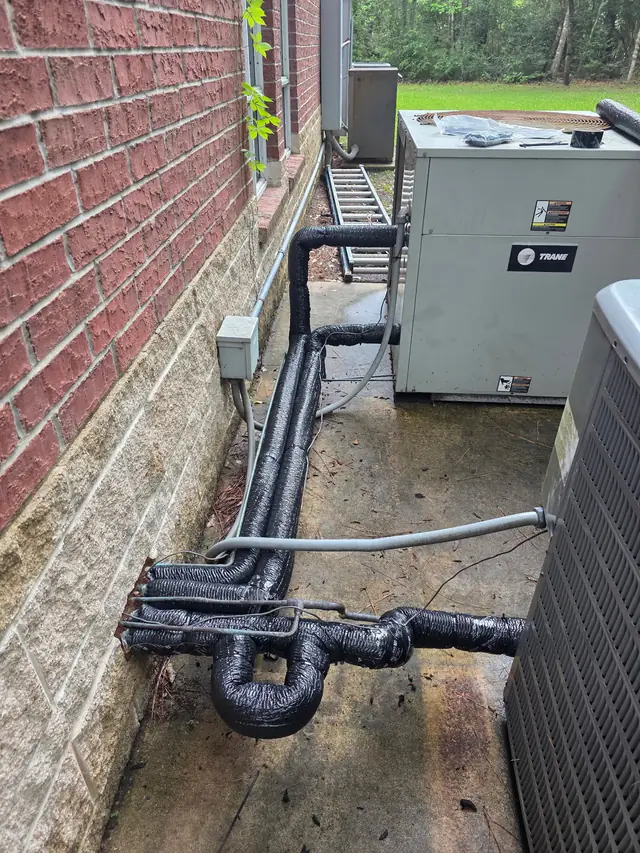
A bill that climbs is a symptom too
It's easy to assume a heat pump is fine as long as the house feels the right temperature, but that isn't always true. Backup heat strips exist for the coldest mornings, when the outdoor unit alone can't keep up, and they draw far more power than the heat pump's compressor does. A system that leans on those strips more than it should, because the reversing valve isn't fully switching or the refrigerant charge has dropped, will still deliver warm air. The homeowner just pays for it in electricity that a working heat pump wouldn't need. The same logic runs in reverse on the cooling side, where reduced efficiency shows up as a compressor working harder to hit the same setpoint.
A repair isn't always the right call. When the equipment is old enough, or the same fault keeps recurring, a straight comparison against a new system is worth having honestly, which is what our heat pump installation page covers. For more on how Texas summers push this equipment, our blog has further reading.
Questions we hear